HANCOLOR
Heat presses
The short answer
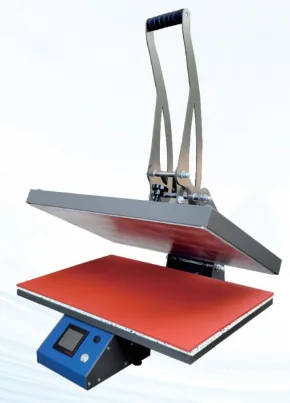
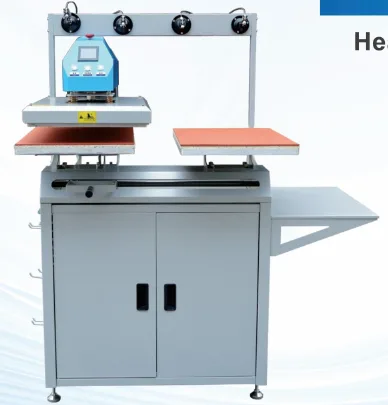
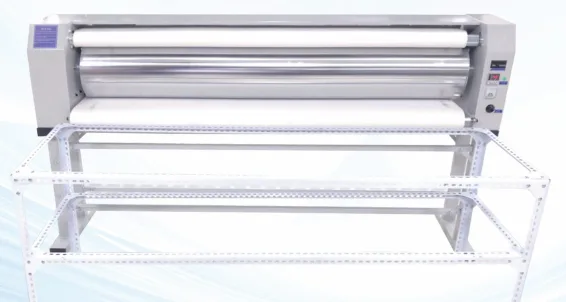
A heat press is sized by the platen, not by the price: it must cover your largest transfer in one press, or you will join prints. The range covers 400 × 600 mm and 1800 mm formats. Confirm three things before choosing — platen size against your artwork, the voltage and plug for your market, and the temperature and dwell settings your transfer material specifies.
Explore heat presses for transfer applications. Confirm platen size, operating method, voltage and transfer settings for your material.
3 models
No matching products. Try another term or contact us.
What to confirm before ordering
Discuss your material, required output, electrical supply and accessory package with our sales team.
Tell us what you print
Share your material, maximum width, expected output and destination country.
Confirm the configuration
Discuss printheads, ink, software, accessories and a sample using your artwork.
Agree the order details
Confirm the equipment list, payment terms, shipping and support before ordering.
Compare every Heat presses model
Every configuration in this range, side by side. Speeds are the 4-pass catalog figure where the catalog lists one, otherwise the fastest pass the catalog gives.
| Model | Working width | Printheads | Catalog speed |
|---|---|---|---|
| YD-4060 | 600 × 400 mm | — | — |
| YD-4060(D)Pro | 400 × 600 mm | — | — |
| 1800 Heat Transfer | 1800 mm | — | — |
All figures transcribed from the 2026 Hancolor catalog. Confirmed configuration is defined by the agreed quotation.
Heat presses
Product questions
What size heat press do I need?
Choose the platen size from the largest transfer you regularly apply, and check the pressure and temperature range against the film, powder and fabric you use. A larger platen handles big graphics and multiple small items, but needs more bench space.
Which heat press suits DTF transfers?
For DTF you need even pressure and controlled temperature across the whole platen, plus a lower platen that lets you position garments easily. Confirm the pressure specification and the timer range, since the film and powder manufacturer will give a recommended temperature and dwell time.
What should I confirm about pressure and temperature control?
Ask for the pressure range and how it is set, the temperature accuracy and the timer resolution. Inconsistent pressure or temperature is the most common cause of transfers that peel, look patchy or feel rough, so it acts as the bottleneck for the whole workflow.
Contact
Let’s discuss your next printer.
Tell us what you want to produce. We will help you identify a suitable configuration.
WhatsApp+86 187 3600 3282
Company addressRoom 3606, Block A, Shenglong Jinzhonghuan, Haifeng West Road Street, Zhengzhou, Henan, China
Factory addressZhongyuan Printing Industrial Park, Yuanyang County, Henan, China