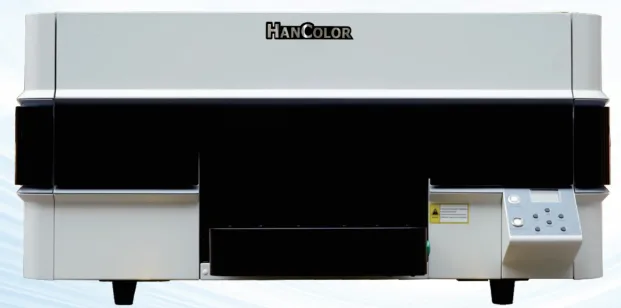
HANCOLOR
DTG printers
The short answer
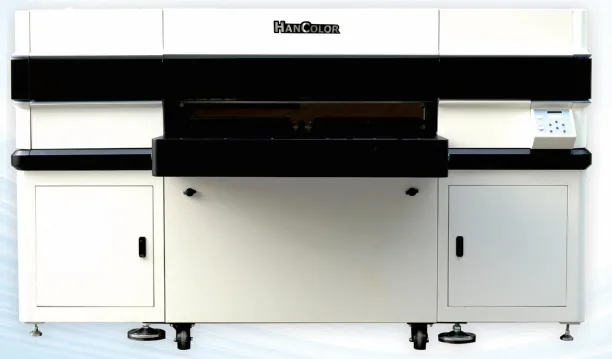
DTG prints water-based pigment ink straight into a pretreated garment, which gives the softest hand and the best result on cotton — at the cost of a pretreatment step and slower output per piece. The range covers single and dual station builds plus the 7590. Decide by order profile: short runs with varied artwork suit DTG, while high-volume or polyester work usually goes to DTF or sublimation.
Explore direct-to-garment equipment. Confirm garment materials, pretreatment, platen setup and curing workflow before selecting a configuration.
3 models
DTG printers
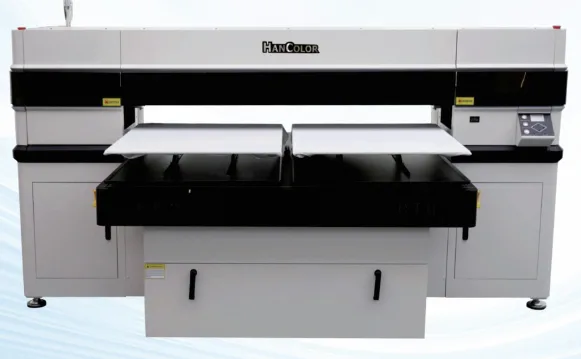
7590
750 × 900 mm × 2 / 350 × 400 mm × 8 / 380 × 430 mm × 4 · 4 dedicated DTG printheads
View configurationNo matching products. Try another term or contact us.
What to confirm before ordering
Discuss your material, required output, electrical supply and accessory package with our sales team.
Tell us what you print
Share your material, maximum width, expected output and destination country.
Confirm the configuration
Discuss printheads, ink, software, accessories and a sample using your artwork.
Agree the order details
Confirm the equipment list, payment terms, shipping and support before ordering.
Compare every DTG printers model
Every configuration in this range, side by side. Speeds are the 4-pass catalog figure where the catalog lists one, otherwise the fastest pass the catalog gives.
| Model | Working width | Printheads | Catalog speed |
|---|---|---|---|
| DTG Single Station | 380 × 430 mm | 2 / 4 × KS1680 | — |
| DTG Dual Station | 380 × 430 mm × 2 | 4 printheads | — |
| 7590 | 750 × 900 mm × 2 / 350 × 400 mm × 8 / 380 × 430 mm × 4 | 4 dedicated DTG printheads | — |
All figures transcribed from the 2026 Hancolor catalog. Confirmed configuration is defined by the agreed quotation.
DTG printers
Product questions
What is a DTG printer used for?
Printing directly onto finished garments — T-shirts, hoodies, tote bags and other cotton or cotton-blend items. Because the image goes straight onto the fabric, DTG is well suited to short runs, one-off designs and full-colour photographic prints.
DTG or DTF?
Choose DTG for cotton garments and detailed, full-colour prints where you want a soft feel and no transfer edge. Choose DTF when you need to decorate polyester, mixed materials, or items that cannot go under the DTG platen, and when the per-piece cost and material flexibility matter more.
What should I prepare before buying?
Confirm your garment types and colours, then ask about the pre-treatment step — garments usually need pretreatment before DTG printing, and the drying method affects the result. Test the full wash cycle on your own garments before deciding.
Contact
Let’s discuss your next printer.
Tell us what you want to produce. We will help you identify a suitable configuration.
WhatsApp+86 187 3600 3282
Company addressRoom 3606, Block A, Shenglong Jinzhonghuan, Haifeng West Road Street, Zhengzhou, Henan, China
Factory addressZhongyuan Printing Industrial Park, Yuanyang County, Henan, China