HANCOLOR · DIGITAL PRINTING EQUIPMENT
DTF, UV & sublimation printers.
Built around your production.
From standout signage to garment transfers and custom labels. Build your next production setup with Hancolor digital printing equipment.
01 / SIGNAGEWide-format graphics
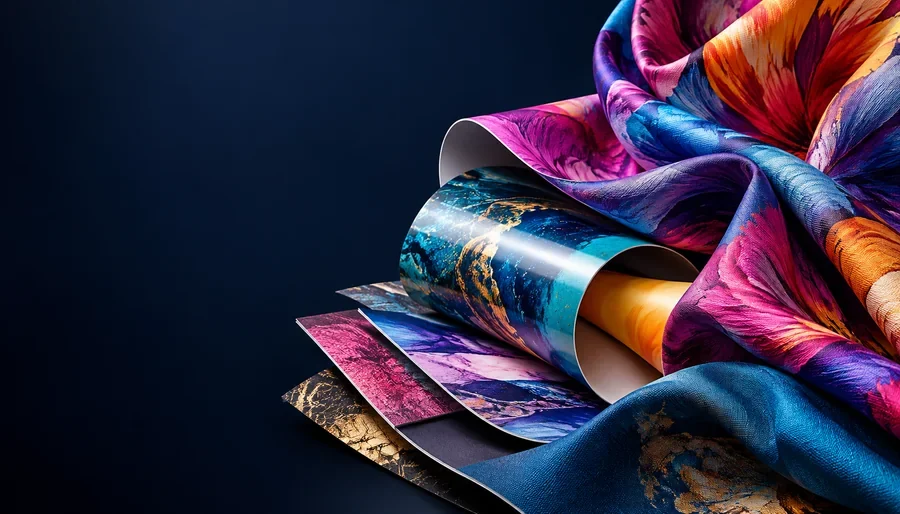
02 / TEXTILESGarment transfer printing
03 / DECORATIONLabels & customized objects
Products
Find your printing solution
Explore 48 distinct equipment models across nine printing and finishing categories. Compare catalog specifications and request a quotation for your application.
Which class fits your order book?
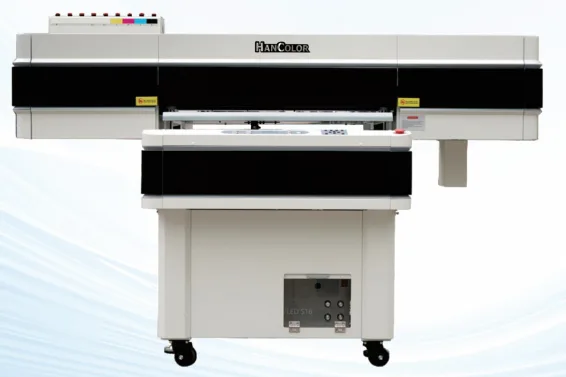
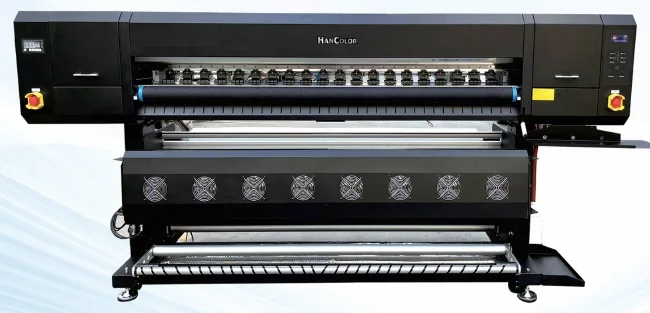
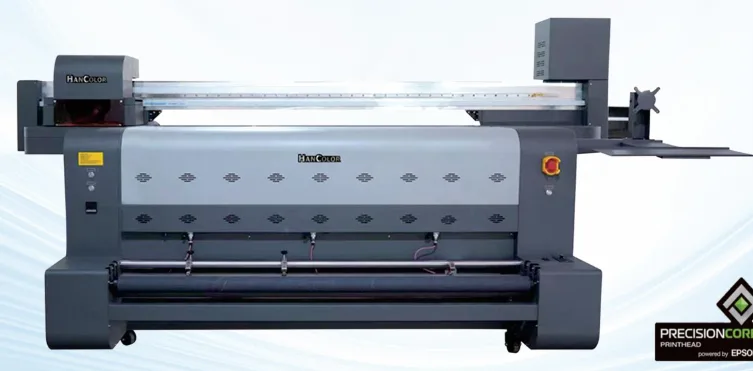
Hancolor builds 48 printer models across five working widths. The table narrows it down by the three parameters that decide fit: print width, head count and rated throughput.
| Class | Print width | Print heads | Throughput | Typical use |
|---|---|---|---|---|
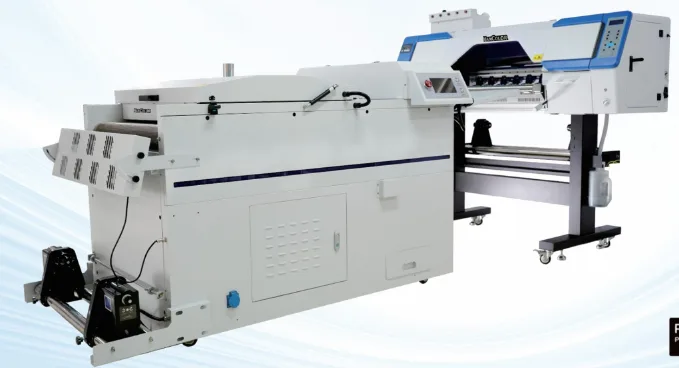
| Entry / studio | 300 mm | 2 | 4.5–7 m²/h at 4-pass | Samples, small batches, startup shops |
| Compact production | 600 mm | 2 | 14 m²/h at 4-pass | Daily garment decoration |
| Mid production | 600 mm | 4 | 28 m²/h at 4-pass | T-shirt shops with repeat orders |
| High volume | 600 mm | 6 | 25 m²/h at 6-pass | Print farms, wholesale suppliers |
| Wide roll | 800–1250 mm | 8 | 55 m²/h at 4-pass | Roll-to-roll transfer, large panels |
| UV flatbed | 600 × 900 mm | 3 | 7.5 m²/h at 6-pass | Rigid panels, acrylic, boards |
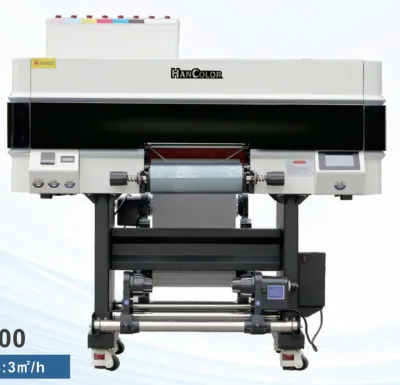
| UV DTF | 300–600 mm | 3 | 4–7 m²/h at 6-pass | Glass, metal, plastic, wood |
Throughput figures are catalogue ratings at the stated pass count. Real output depends on coverage, media and operator. Tell us your monthly volume in square metres and the substrates you print on, and we will recommend one model rather than a catalogue.
What to confirm before ordering
Match the process to the product.
Different processes need different inks, media and finishing equipment. Use your finished product as the starting point.
| Printing process | Typical production | Discuss with our team |
|---|---|---|
| Garment DTF | Transfers for T-shirts, bags and suitable textiles | Film, powder, curing equipment and heat press |
| UV DTF | Adhesive transfers for suitable objects and gifts | Film system, lamination and surface adhesion |
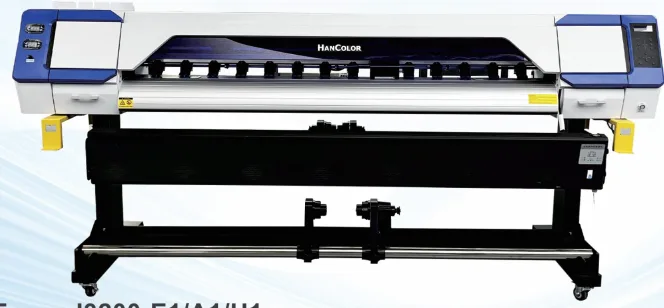
| Eco-solvent | Signage, banners and compatible coated media | Media coating, ink setup and print width |
| UV flatbed | Direct decoration of compatible rigid objects | Object height, fixtures and adhesion tests |
About Hancolor
A direct connection to your printing partner.
Founded in 2021 in Zhengzhou, China, Henan Yinneng Electronic Technology Co., Ltd. supplies digital printing equipment under the Hancolor brand. Our range covers garment DTF and DTG, eco-solvent, UV, sublimation, flag printing and heat-transfer equipment. We help B2B customers select equipment, test applications and prepare their printing workflow.
- Company
- Henan Yinneng Electronic Technology Co., Ltd.
- Brand
- Hancolor
- Company address
- Room 3606, Block A, Shenglong Jinzhonghuan, Haifeng West Road Street, Zhengzhou, Henan, China
- Factory address
- Zhongyuan Printing Industrial Park, Yuanyang County, Henan, China
Please contact us before arranging a visit.
From your application to the right machine.
Tell us what you print
Share your material, maximum width, expected output and destination country.
Confirm the configuration
Discuss printheads, ink, software, accessories and a sample using your artwork.
Agree the order details
Confirm the equipment list, payment terms, shipping and support before ordering.
DTF, UV DTF or sublimation — which process do you need?
The process decides the machine, the consumables and the substrates you can sell. These three cover most garment and hard-surface work.
DTF (direct to film)
Prints onto PET film, applies hot-melt powder, then bonds the transfer to fabric with a heat press. Works on cotton, polyester, blends and dark garments without pre-treatment. Needs a printer, powder shaker, curing unit and heat press. Best for apparel, T-shirts, hoodies and workwear. See garment DTF printers ↗
UV DTF
Prints and cures with UV light in one pass, producing an adhesive transfer applied by hand under pressure. No heat press is needed, so rigid and heat-sensitive items work: glass, metal, acrylic, plastic, wood and ceramics. Best for mugs, bottles, phone cases, promotional products and signage. See UV DTF printers ↗
Sublimation
Prints onto transfer paper, then heat-presses onto polyester or coated substrates. No hand feel on fabric, but the surface must accept sublimation ink — light polyester only. Best for sportswear, coated mugs and polyester display textiles. See dye-sublimation printers ↗
The one-line rule: soft fabric and dark colours call for DTF. Rigid surface or no heat press means UV DTF. Light polyester at the lowest ink cost is sublimation. Most shops end up running two of the three.
What decides the cost per square metre?
The machine price is not the number that decides whether a job is profitable. Cost per printed square metre is, and it has four parts:
- Ink — usually the largest share. White ink costs more than colour, and coverage matters more than anything else — a 30% coverage print uses well under half the ink of a full-bleed image.
- Film — priced by the metre, so it scales with width. Running narrower film than the print width wastes material.
- Powder — hot-melt adhesive, consumed per square metre and driven by the same coverage variable.
- Labour and power — fixed per hour, so higher throughput spreads them over more square metres.
Consumable prices move with the market, so we quote them at the time of ordering rather than publishing a list that goes stale. Ask for a cost sheet for the model you are considering — we will fill in consumption figures for your typical artwork so two configurations can be compared on the same basis.
Service, spares and what the warranty covers
Warranty is 12 months on the machine. Print heads are consumables and are not covered — head damage usually comes from ink starvation, air in the line or a physical strike, all of which are operating conditions rather than manufacturing defects. We still diagnose head problems remotely and tell you whether a head can be recovered or needs replacing.
A replacement Epson I3200 head costs roughly RMB 6,000–7,200 depending on the series. If you run production daily, keep one spare on the shelf.
Boards, pumps, dampers, capping stations, cables and ink-path parts are stocked for every model we have sold. Tell us the model and the symptom and we will identify the part from the machine configuration rather than asking you to guess a part number.
Lead time is 10–20 days for a standard configuration and around 7 days for an urgent order. Training is available on site or by video call, and covers daily maintenance, white ink circulation and the settings behind most early failures.
News
Latest from the printing industry
Industry news
DuPont to run automated DTF lines live at PRINTING United Expo
DuPont Artistri will operate two automated DTF production lines continuously during PRINTING United Expo 2026, from film printing through to the finished transfer.
Read more ↗Company news
Hancolor publishes its model-based equipment catalog
Compare 48 distinct equipment models across nine categories, with the 2026 catalog specifications now published on every product page.
Read more ↗Industry news
PRINTWide 2026a Alpha brings G7+ into wide-gamut workflow testing
PRINTING United Alliance has released an experimental color profile for evaluating wider-gamut CMYK workflows.
Read more ↗2026 / 2027
Where the print industry meets
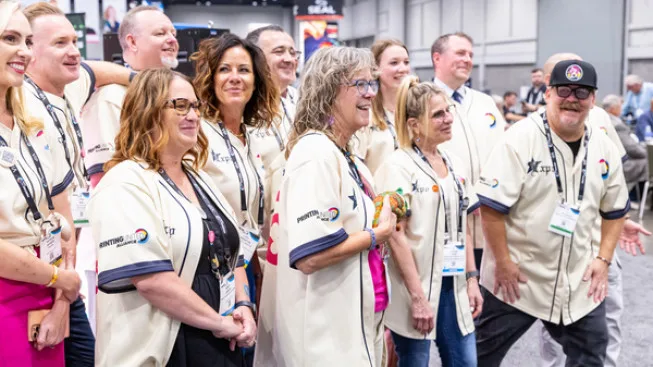
Official promotional / previous-edition image · © PRINTING United Alliance
United States · Las Vegas, Nevada
PRINTING United Expo 2026
–
Las Vegas Convention Center, North & Central Halls
View event details ↗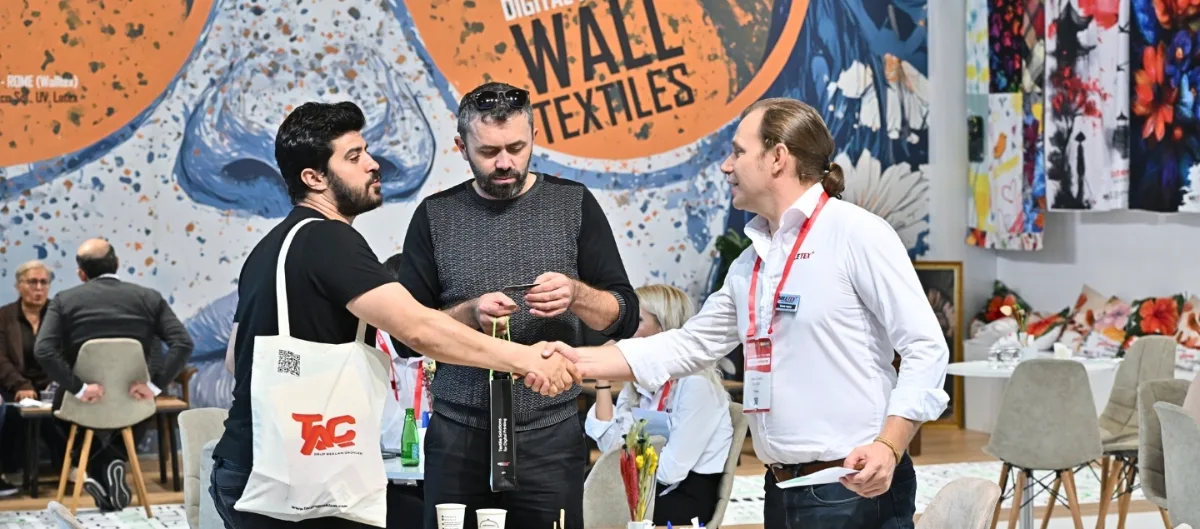
Official promotional / previous-edition image · © SIGN İstanbul / Informa Markets
Türkiye · Istanbul
SIGN İstanbul 2026
–
Istanbul Expo Center (İstanbul Fuar Merkezi), Halls 5–7
View event details ↗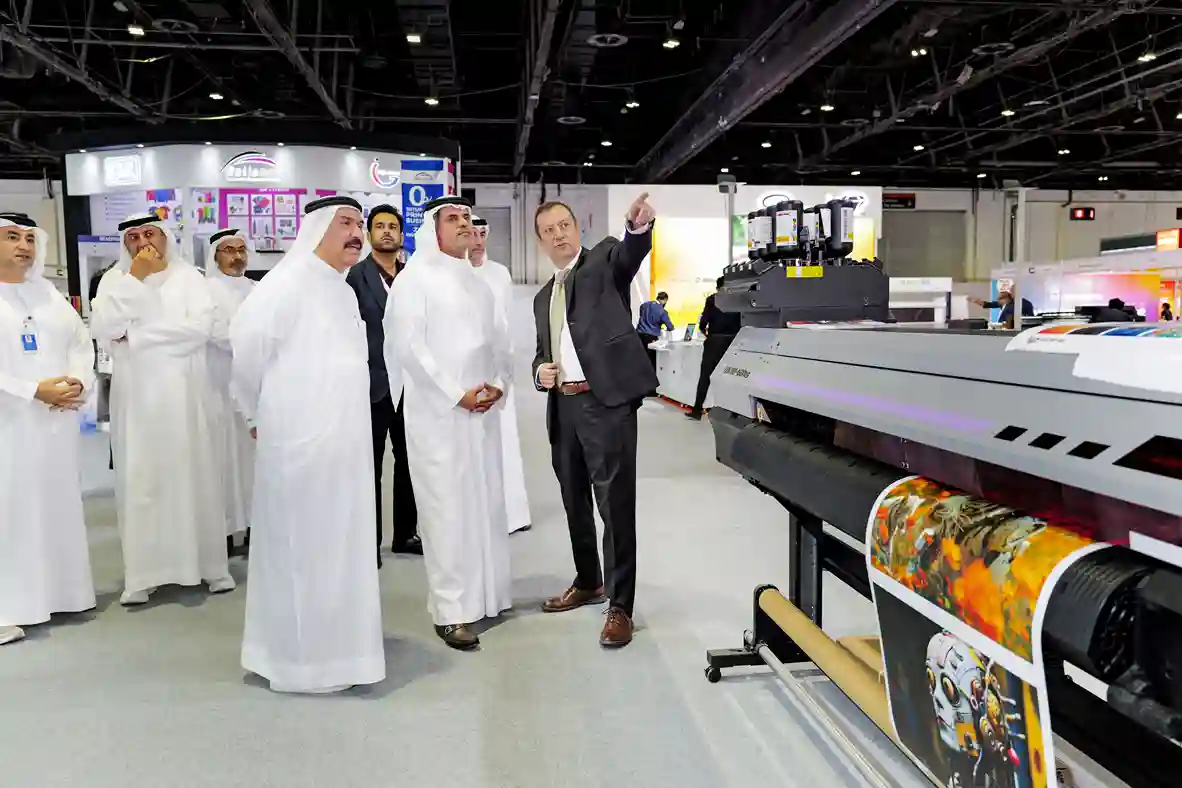
Official promotional / previous-edition image · © SGI MENA / GL Exhibitions
Hancolor participation has not been announced. This is an industry event listing.
What to confirm before ordering
Before you choose a printer
How are DTF and UV DTF different?
Garment DTF prints onto transfer film for a heat-transfer workflow. UV DTF produces adhesive transfers for decorating suitable objects. Choose by application; the inks and films are not interchangeable.
How do I request an accurate quotation?
Send the product or configuration, material, printing width, expected output, quantity and destination. Ask for a sample print and an itemized quotation including the equipment and accessories.
Can I request customization?
Contact us about branding and packaging requirements. Available customization and minimum quantities depend on the selected machine and order.
What should I confirm about delivery and support?
Confirm the production schedule, freight, import requirements, warranty scope and installation support in the written quotation. Printheads, ink systems and consumables may have different coverage.
How many square metres per hour can a 60 cm four-head DTF printer produce?
The 60 cm four-head model (H3070-4) is rated 28 m²/h at 4-pass, 15 m²/h at 6-pass and 12 m²/h at 8-pass. Production work usually runs at 6-pass, so plan on roughly 15 m²/h — an eight-hour shift covers about 120 m². The higher 200+ m² per shift figures come from 4-pass operation, which is used for large solid areas rather than fine detail.
Do I need a heat press, and what size?
Garment DTF needs a heat press to bond the transfer — the printer alone does not finish the job. Match the platen to your largest design: 40 × 60 cm covers most T-shirt fronts and backs. UV DTF needs no press at all, which is why it suits rigid and heat-sensitive items.
Can I use third-party ink and film?
The machine runs on third-party consumables and the firmware is not locked to our own. We do not recommend it: ink viscosity and film coating differ between suppliers, and a mismatch shows up as clogged heads or transfers that crack after washing. If you source elsewhere, test one roll before committing to a batch.
What maintenance is required daily and weekly?
Daily: clean the capping station, run a nozzle check, print a short test strip. Weekly: circulate the white ink, check the filters, wipe the encoder strip. White ink settles faster than colour and must be circulated or it blocks the head — this is the most common cause of avoidable downtime.
What does the warranty cover?
Twelve months on the machine. Print heads are consumables and are not covered, because head damage normally comes from ink starvation, air in the line or a physical strike rather than a manufacturing fault. We still diagnose head problems remotely and will tell you whether a head can be recovered or must be replaced.
Is training provided?
Yes — on site or by video call. It covers daily maintenance, white ink circulation, colour settings and the workflow from RIP to finished transfer. Most customers take the video session at installation and a follow-up call once they are running production.
Contact
Let’s discuss your next printer.
Tell us what you want to produce. We will help you identify a suitable configuration.
WhatsApp+86 187 3600 3282
Company addressRoom 3606, Block A, Shenglong Jinzhonghuan, Haifeng West Road Street, Zhengzhou, Henan, China
Factory addressZhongyuan Printing Industrial Park, Yuanyang County, Henan, China